
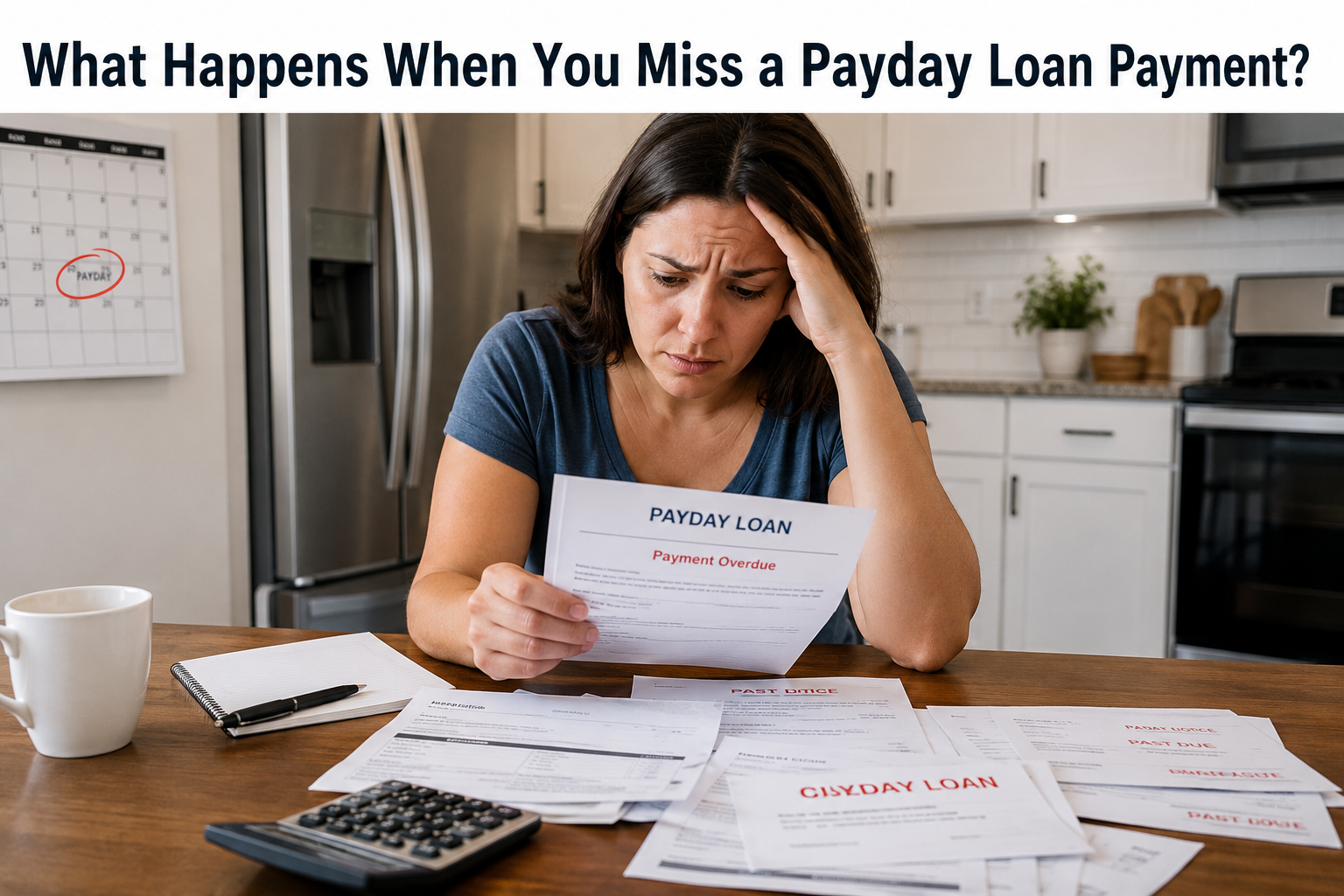
Unexpected expenses can make it difficult to repay a payday loan by the due date. If you are wondering what happens if you can’t repay a payday loan on time it is important to understand the possible consequences before ignoring the payment. Your lender, loan agreement, and state laws can determine whether you may incur additional fees, collection activity, bank charges, or legal consequences.
A payday loan is generally a short-term, high-cost loan that is expected to be repaid in a lump sum around your next payday. If you cannot make the payment on time, taking action early can help you understand your options and potentially prevent the situation from becoming more expensive.
Possible Consequences of Missing a Payday Loan Payment
What happens next can depend on your loan terms and local laws. Common outcomes may include:
* Late or returned-payment fees
* Bank or overdraft fees
* Attempts to withdraw money from your account
* Loan renewal or rollover offers
* Collection calls or letters
* Potential damage to your credit if the debt reaches collections
* Possible legal action in some situations
The Consumer Financial Protection Bureau (CFPB) explains that if a lender attempts to withdraw money from your account and there are insufficient funds, you could potentially face fees from both the lender and your bank or credit union.
One of the first consequences of missing a payday loan due date can be additional charges. Depending on your agreement and applicable law, the lender may charge a late fee or returned-payment fee.
Your bank may also charge an NSF or overdraft fee if the lender attempts to collect the payment when there is not enough money in your account.
This means that failing to repay a relatively small loan could create additional financial pressure. Before making assumptions about the fees, review your loan agreement and check the rules that apply where you live.
Many payday loans are set up with a post-dated check or electronic payment authorization. If you do not make the payment yourself, the lender may attempt to collect the amount through the payment method authorized under your agreement.
If your account does not have sufficient funds, the attempted withdrawal could fail and potentially result in additional bank charges.
Some payday lenders may offer a payday loan rollover, renewal, or extension when you cannot pay the full balance. This may give you additional time, but it does not necessarily make the loan cheaper.
With a rollover, you may have to pay a fee to extend the loan while still owing the original amount. Repeated rollovers can become expensive because you may continue paying fees without reducing the principal balance.
If you continue to miss payments, the lender may eventually attempt to collect the unpaid balance through a debt collection agency.
This can make an already stressful financial situation more difficult. If the payday loan remains unpaid, the lender or collection agency may contact you about the outstanding debt.
Many people ask, Will a payday loan default hurt my credit? Whether an unpaid payday loan affects your credit can depend on how the lender reports the account.
In general, payday lenders do not typically report regular payday loan activity to the three major nationwide credit bureaus. However, an unpaid loan that is transferred to collections could potentially be reported. A lawsuit and resulting court judgment may also affect your credit situation.
If you know you cannot make the payment, do not simply ignore the lender. Consider these steps:
Tell the lender that you are having difficulty making the scheduled payment. Ask whether they offer a repayment arrangement or another option that could help you avoid unnecessary fees.
Check the agreement for information about late fees, automatic withdrawals, rollover policies, repayment dates, and collection procedures.
Using another payday loan to repay the first one can create a cycle of borrowing. Instead, look at your overall budget and consider alternatives that may be less expensive.
Make sure you have enough money for essential needs such as housing, utilities, food, transportation, and other critical expenses. Creating a realistic budget can help you determine how much you can actually afford toward the debt.
If payday loan debt is becoming difficult to manage, consider speaking with a qualified credit counselor or financial professional. Understanding your options early may help you avoid repeated borrowing.
If you have authorized electronic withdrawals, review the terms of your agreement and understand your rights regarding stopping or revoking payment authorization. You may also contact your bank or credit union about available procedures.
So, what happens if you can’t repay a payday loan on time? You may face late fees, failed-payment charges, additional bank fees, collection efforts, and potentially legal consequences depending on your circumstances and local laws. A rollover may provide more time, but repeated extensions can make the debt more expensive.
The most important step is to act quickly. Review your loan agreement, communicate with the lender, understand the fees involved, and consider alternatives before taking another high-cost loan.
For more information about personal finance, borrowing, debt management, and financial assistance, visit at (https://speedycreditnet.com/).